Choosing the right RV roof exhaust fan is essential for keeping your living space comfortable, reducing humidity, and preventing mold during long trips. This guide highlights five reliable models that balance power, noise, installation ease, and smart features. Each option supports 14″x14″ roof openings and offers different blends of speed, remote control, rain sensors, and build quality. Use the buying guide below to compare key considerations and pick the best fit for your camper, trailer, or motorhome.
Quick comparison — below is a summary of the featured products to help you scan quickly:
| Product | Brand | Key Features | CFM | Remote |
|---|---|---|---|---|
| Kohree 14″ RV Vent Fan (Blue) | Kohree | 10 speeds; temperature sensor; rain sensor; removable screen | 934 CFM | Yes |
| RV Vent Fan 14×14 (Rain Sensor) | RVLOVENT | Remote control; rain sensor; UV cover | 1000 CFM | Yes |
| Kohree 14″ RV Vent Fan (No Remote) | Kohree | 10 speeds; rain/temperature sensors; removable screen | 934 CFM | No |
| 2012 Air Max 14″ Vent | 2012 | Ultra-quiet; auto rain sensor; remote; 4-speed settings | Not specified | Yes |
| RVMATE 14×14 RV Roof Vent | RVMATE | Remote; reversible; leak-resistant | Not specified | Yes |
Kohree 14″ RV Vent Fan With Remote

The Kohree 14″ RV Vent Fan uses a powerful 934 CFM airflow to rapidly cool RV interiors and improve air exchange. It includes a built-in temperature sensor that automatically activates the exhaust when interior temps rise above 78.8°F and turns off when they drop below that threshold, helping maintain a comfortable environment. Installation is designed for standard 14″ x 14″ roof openings and includes screws, extra sealing tape, and a removable mosquito-proof screen. It uses a 12V system with a two-wire setup (black for negative, red for positive). Noise is kept low with a 10-speed, high-efficiency, ultra-quiet motor at up to 50 dB, while power consumption remains modest at 25W in high-power mode.
Pros include robust cooling, automatic temperature control, and a comprehensive installation kit. The model’s rain and temperature sensing features can reduce manual adjustments while keeping rainwater out of the living space. The fan’s reversible design helps exhaust stale air or bring in fresh air as needed. Potential downsides are the lack of a dedicated remote (for this variant) and the need to ensure compatibility with your specific roof setup beyond standard 14″ x 14″ openings. Overall, a solid choice for campers seeking quiet but effective ventilation.
RVLOVENT 14×14 Roof Vent With Rain Sensor
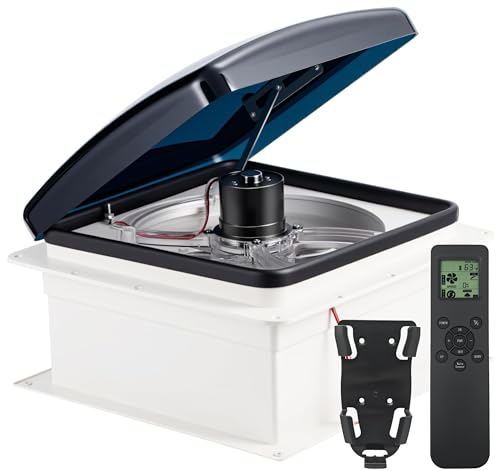
This 14×14 RV roof vent from RVLOVENT emphasizes remote operation, a remote-controlled 10-speed system, and automatic rain sensing to close the vent when moisture is detected. Its UV-resistant PC cover guards against sun exposure and long-term yellowing, while the included extra screen frame provides a ready replacement option if the original screen wears out. The unit delivers up to 1000 CFM, offering strong air exchange to quickly clear heat, odors, and humidity. A potential consideration is the need to confirm compatibility with your roof thickness and mounting hardware, as the kit emphasizes straightforward installation with standard openings.
Strengths include the remote convenience, rain protection, and durable weather-resistant construction. The 1000 CFM rating is particularly appealing for larger RVs or hot climates. If silent operation is a priority, test results and user reviews may help verify real-world noise levels. This model serves well for owners who want a balance of power and automated weather response while maintaining simple installation.
Kohree 14″ RV Vent Fan With Remote (Reversible)

This Kohree model mirrors the first option with a 934 CFM airflow and a 10-speed, ultra-quiet motor. It adds a built-in temperature sensor and a removable screen for easy cleaning and maintenance. The unit is designed for 14″ x 14″ openings and uses a standard two-wire setup (black negative, red positive). The key distinction is whether you need a remote control; this variant emphasizes control from a distance along with the same protective features like the mosquito-proof screen and a reversible airflow option to vent or introduce fresh air as required.
As with other Kohree fans, installation should be straightforward for most RV roofs, but check for roof thickness compatibility and ensure proper sealing around the cutout to prevent leaks. The combination of automatic temperature control and remote operation makes this a convenient pick for RV users who want hands-off climate management and flexible airflow modes.
2012 Air Max 14″ Vent With Rain Sensor

The 2012 Air Max model emphasizes ultra-low noise operation with a brushless motor promising longer life and reduced power draw. It features a remote control and reversible airflow with four speed settings, enabling both exhaust and intake functions. A rain sensor and patented curved blades with dynamic balance tech help minimize wind noise while maintaining effective ventilation. The product is designed for 12V RV systems and aims to provide quiet, efficient operation for bedrooms and bathrooms alike.
From an energy perspective, the brushless motor is key for battery-friendly operation, which matters for boondocking or off-grid trips. The absence of a widely publicized CFM figure in the listing means you should verify airflow in your specific RV setup, especially for larger spaces or higher ventilation needs. The rain sensor adds a layer of protection against leaks and weather, making this a compelling choice for users prioritizing automatic weather response and quiet performance.
RVMATE 14×14 RV Roof Vent Fan

The RVMATE model matches common 14″x14″ openings and emphasizes remote operation with a reversible airflow feature. The unit is described as heavy-duty with a leak-proof, one-piece frame that helps seal the roof effectively against water intrusion. It includes putty tape or similar sealing materials to help achieve a secure fit on various RV roofs. The remote control enables venting control while inside the RV, which is convenient during travel or when the roof hatch is hard to reach. Features like a UV-resistant construction support long-term outdoor use.
With a focus on leak resistance and ease of installation, this model suits buyers who want reliable performance without complicated setup. The absence of a clearly stated CFM in the listing is a consideration for users who need precise air movement data, but the combination of remote control and reversible airflow keeps it competitive for many RV configurations.
Buying Guide: Key Purchase Considerations
RV roof vent fans should balance airflow, noise, installation ease, and smart features. Consider the following factors to choose the best option for your rig:
- Airflow and room size: Higher CFM is better for larger RVs or hotter climates. Compare models with 900–1000+ CFM for robust cooling, while smaller spaces can suffice with 600–800 CFM.
- Noise levels: Look for ultra-quiet motors (often 25–50 dB at typical speeds). Brushless motors tend to run smoother and last longer than brushed designs.
- Control features: Remote controls add convenience, especially for high or hard-to-reach vents. Rain sensors help protect interiors during sudden storms, and temperature sensors can automate cooling without manual intervention.
- Installation and compatibility: Most 14″ x 14″ vents fit standard openings, but verify roof thickness, mounting hardware, and whether extra sealing tape or putty is included.
- Durability and weather resistance: UV-resistant housings and screens resist sun exposure and outdoor elements. A leak-resistant frame helps prevent water damage.
- Maintenance: Removable screens and easy-to-clean blades simplify upkeep. Consider whether replacement screens are readily available.
- Power and energy use: Most RV fans operate on 12V systems. Check wattage to ensure it won’t overly tax batteries, especially on longer trips.
- Warranty and support: A solid warranty and accessible customer support can matter after installation when troubleshooting.
When choosing among these options, align features with your typical usage: frequent travel with hot days benefits from high CFM and rain sensors; extended off-grid stays favor energy efficiency and quiet operation; and models with remote control provide convenience for larger RVs or hard-to-reach installations. Compare the included installation hardware and screens, because a complete kit reduces extra purchases and fit issues.
In summary, a 14″ x 14″ RV roof vent fan with a balance of strong airflow, quiet operation, and weather-responsive features offers the best all-around value for most American RVers. For hot climates or larger RVs, consider models with 1000 CFM or higher. If you value automation, prioritize rain sensors and remote control. For simple setups, standard 934 CFM models with easy installation remain reliable workhorses.