Choosing the right rubber roof coating or sealant can extend the life of a home’s roof by preventing leaks and reducing heat gain. This article highlights five reliable products designed for flat, low-slope, or metal residential roofs. Each option focuses on durability, flexibility, and ease of application, helping homeowners compare performance across materials and brands.
| Product | Brand | Key Benefit |
|---|---|---|
| RubberTop Roof Coating | Rubbertop USA | Elastomeric, easy application |
| Liquid Rubber Waterproof Sealant (1 Gallon) | Liquid Rubber | Elastic membrane, broad substrate adhesion |
| AMES MSS1 Maximum Stretch Roof Coating | AMES | 650% elongation, high reflectivity |
| GEOCEL GC55103 Roof Bonding Sealant | Geocel | Underwater bonding, quick dry |
| Ames Maximum Stretch White Roof Coating (4.6 Gallon) | AMES | Large coverage, 88% reflectivity |
RubberTop Roof Coating

RubberTop Roof Coating is an acrylic-siliconized elastomeric coating designed for waterproofing and reflecting heat. Its formulation aims to lower interior temperatures and provide a flexible, durable seal. The coating can be applied via spray, roller, or brush, making it adaptable for DIY or contractor projects. Suitable substrates include metal and built-up roofs commonly used on homes with flat or low-slope designs. This product emphasizes ease of application and interior comfort improvements through reduced heat transfer.
Liquid Rubber Waterproof Sealant – 1 Gallon

This industrial-strength bitumen formula creates a seamless waterproof membrane for flat, low-slope, and metal roofs, as well as foundations and gutters. It offers outstanding flexibility, with elongation exceeding 950%, allowing it to move with building shifts and temperature changes without cracking or peeling. The coating adheres well to diverse substrates and can be brushed, rolled, or sprayed for 60–80 mil thickness with multiple coats, depending on the area and moisture management needs.
AMES MSS1 Maximum Stretch Roof Coating
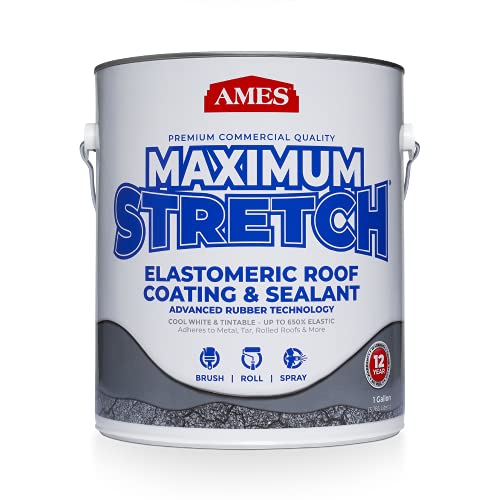
AMES MSS1 is a white, elastomeric acrylic roof coating with high elongation (about 650%). It resists cracking, peeling, and weathering while reflecting sunlight with 88% reflectivity. Suitable for metal roofing, tar, and rolled roofs, it serves as a versatile sealant for low-slope residential roofs. The white finish helps reduce heat absorption, contributing to cooler attic and living spaces and potential energy savings when applied as part of a broader cool-roof strategy.
GEOCEL GC55103 Roof Bonding Sealant

Geocel GC55103 is a premium one-component bonding sealant designed specifically for roofing applications. It cures underwater and adheres to asphalt shingles, metal, EPDM, primed TPO/PVC, and other common substrates. Quick-drying properties help minimize downtime for roof repair projects. This sealant is suitable for sealing joints, gaps, and small penetrations, offering reliable adhesion in varied weather conditions and roof systems.
Liquid Rubber RV Roof Sealant – 1 Gallon

Liquid Rubber RV Roof Sealant provides a flexible, solar-reflective membrane suitable for RVs and other multi-surface applications. While marketed for RVs, its elastomeric properties and heat-reflective characteristics can benefit homes with EPDM, TPO, fiberglass, or aluminum roof sections adapted to similar substrates. This product emphasizes UV resistance and interior temperature control, contributing to long-term roof performance and occupant comfort when used on appropriate residential roof segments.
Buying Guide: Key Purchase Considerations
- Roof type and substrate: Select coatings compatible with flat, low-slope, metal, EPDM, TPO, or fiberglass roofs common on many homes.
- Elongation and flexibility: Higher elongation (often 650–950%+) helps accommodate building movement without cracking.
- Heat reflectivity: Light-colored or white coatings can reduce cooling loads by reflecting sunlight; this is especially beneficial in hot climates.
- Application method: Brush, roller, or spray options affect project time and labor; ensure the product matches your preferred method.
- Durability and UV resistance: Look for membranes and sealants designed to resist cracking, UV damage, and weathering for long-term performance.
- Curing time and rainfall: Quick-drying formulas minimize exposure risk; plan projects during dry periods.
- Coverage and thickness: Some products specify coverage per gallon and recommended thickness to achieve desired membrane strength.
- Maintenance compatibility: Consider primers or companion products that improve adhesion and longevity on common home roof materials.
- Environmental and safety considerations: Check VOC content and proper ventilation requirements during application.
These options provide a range of performance features—from high reflectivity and elongation to underwater bonding and easy application. Homeowners can select a coating or sealant based on roof type, climate, and maintenance goals to maximize the lifespan of rubber-based roofs for residential use.